ServicesNon-Reflective Window Film
Non-Reflective Window Film in Alvin, TX
You want a cooler room and less glare, but you do not want windows that look like mirrors from the street or turn dark and shiny at night. Non-reflective window film keeps your glass looking like glass while it takes the edge off the sun.
Sun control that keeps your windows looking natural
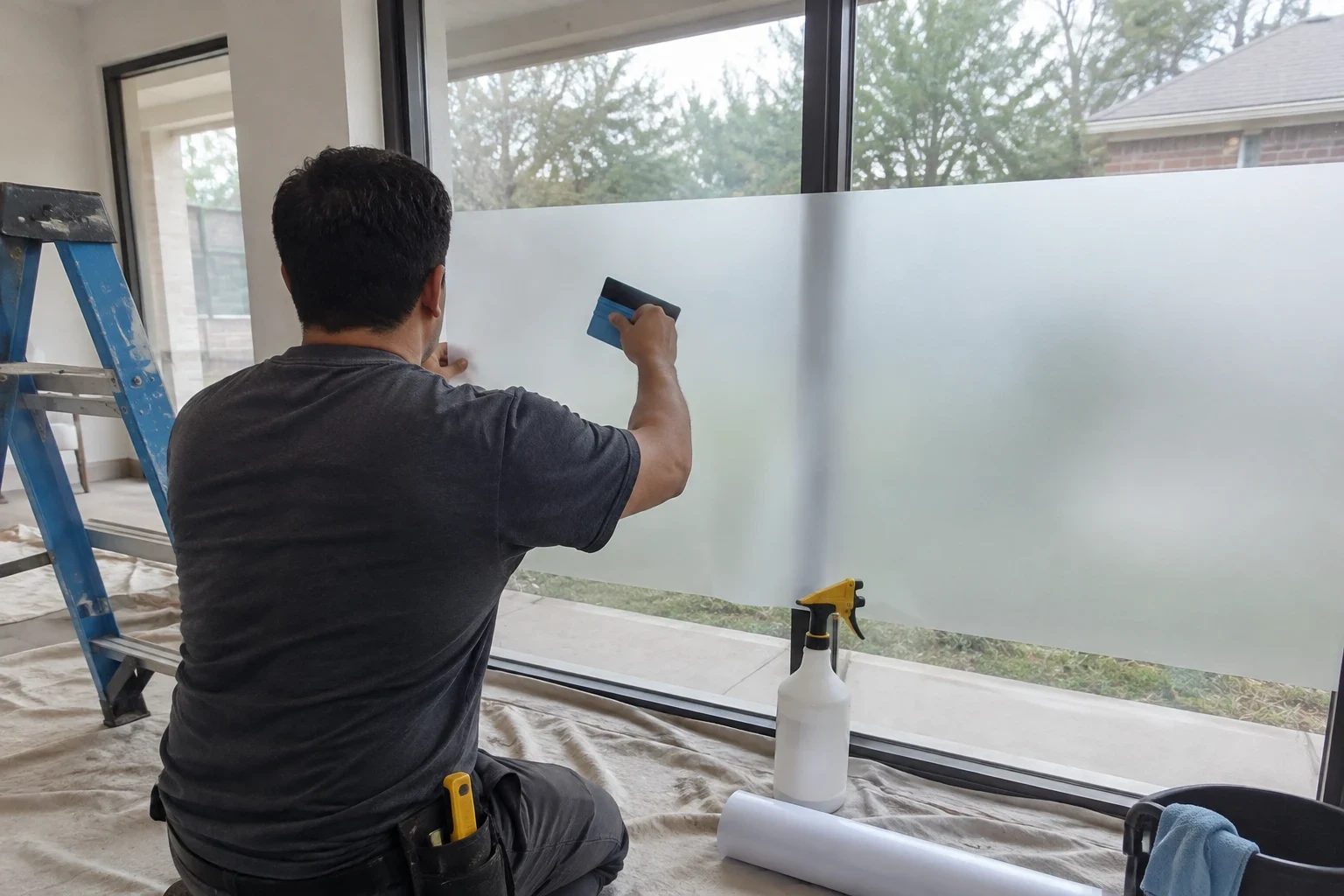
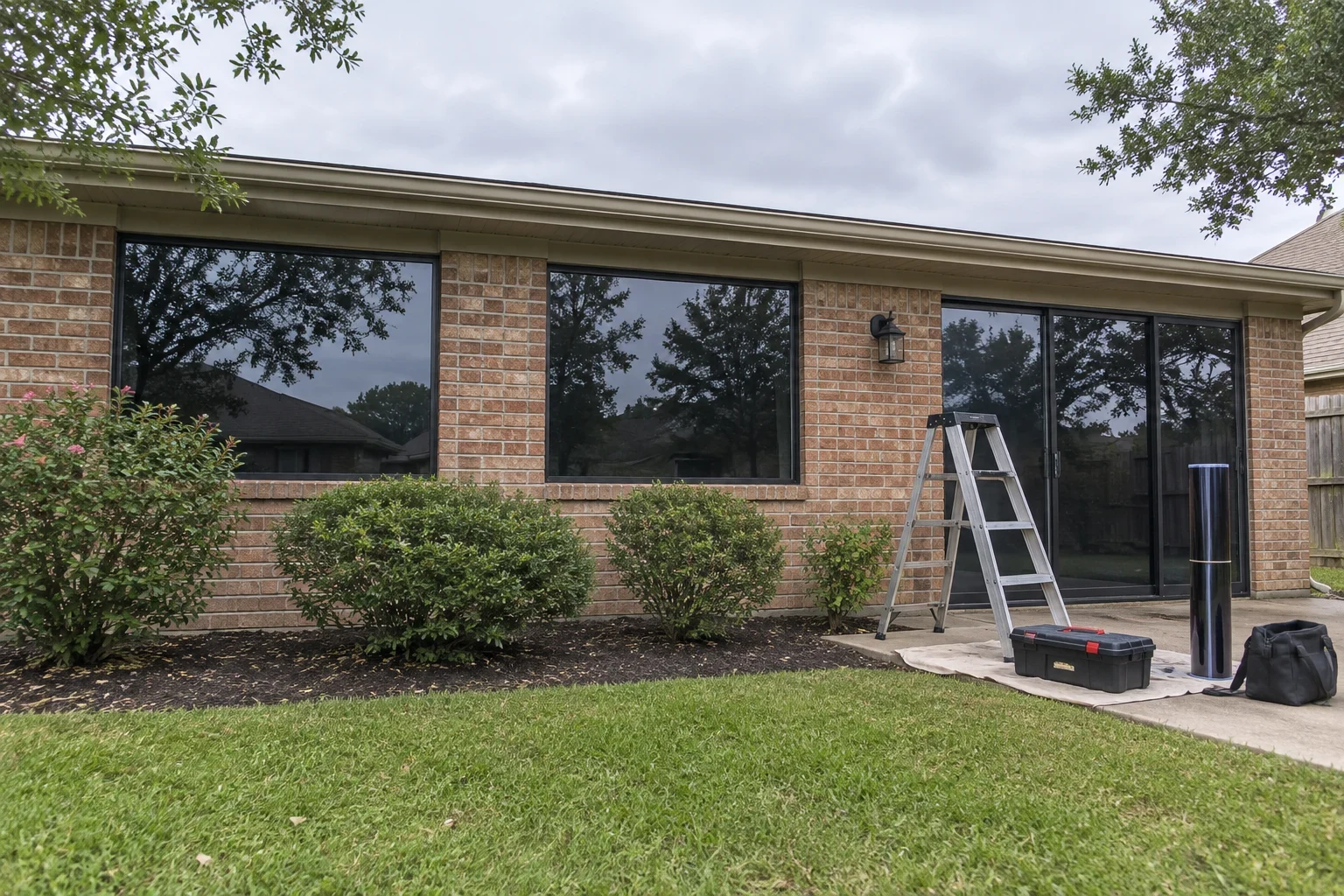
Non-reflective window film is a low-reflectivity film applied to the inside of your glass. It reduces heat, glare and UV without the silver or bronze shine that reflective films have. From the yard your house looks the way it always has, and from the couch at night you see a window, not your own reflection.
It is often the right call for front-facing windows, homes with HOA rules about exterior appearance, and rooms where you spend evenings with the lights on. Many of our customers pick it for living rooms and kitchens where they want the afternoon sun tamed but still want a clear, true-color view of the yard.
We will be straight with you about the tradeoff. A non-reflective film usually gives less daytime privacy than a mirrored one, and a basic dyed version rejects less heat. If privacy matters most, our Privacy Window Tinting page or Reflective Window Film may suit you better. If heat is the main concern, a non-reflective ceramic film closes most of that gap, and we will show you both options side by side.
What comes with your non-reflective film install
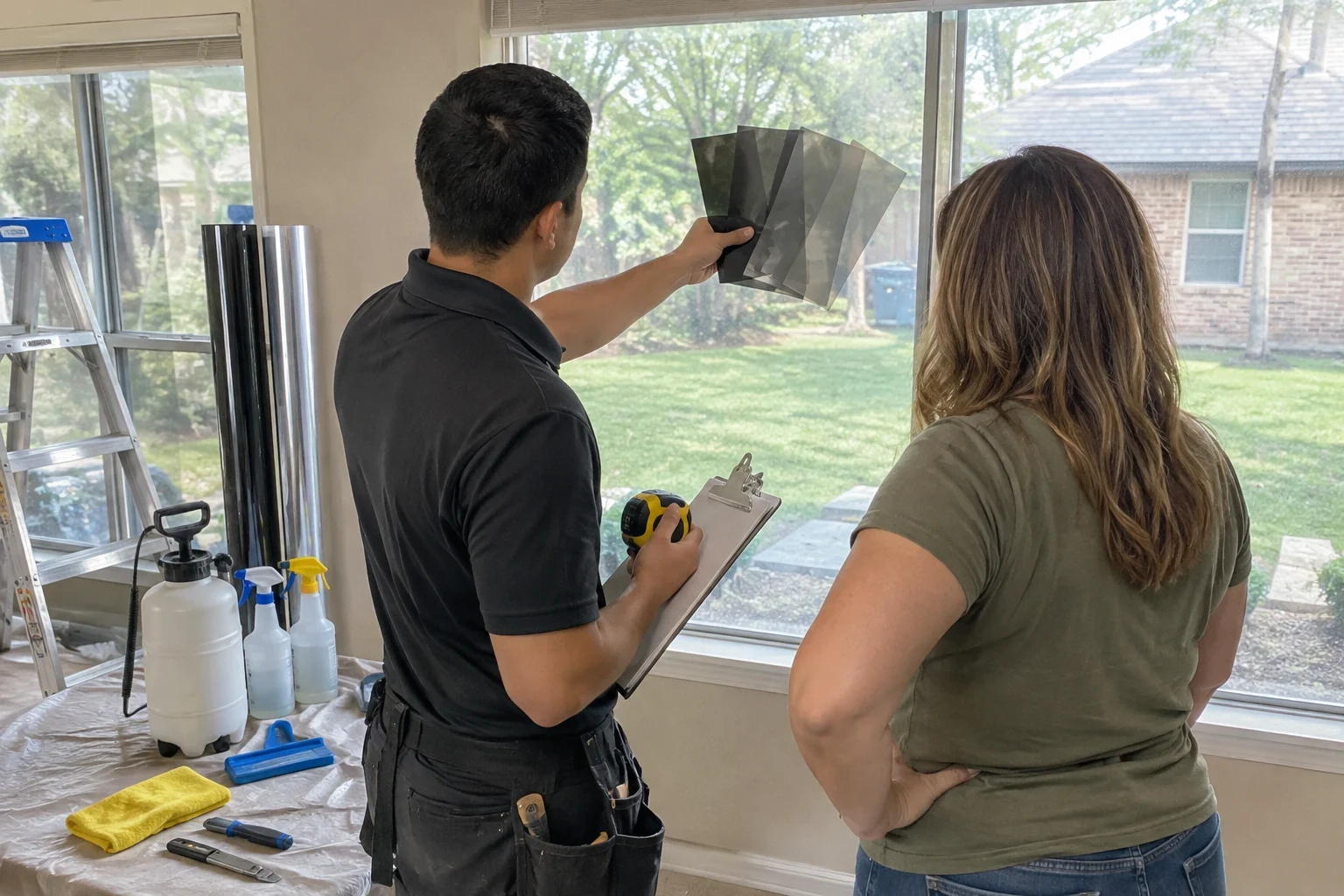
- We check each window in person
- We visit every window on your list, see which direction it faces and identify the glass. Dual-pane and low-E units need a film that won't overheat the glass, so the film is chosen for the window itself, not only the room.
- Samples held to your windows
- You see each shade and how clear it looks against your own glass and light, so you know what you're choosing before any film is applied.
- A written quote, by phone and on paper
- Your quote spells out the windows, the film and the square footage. There are no loose totals and no extra charges added later.
- Prep that protects your home
- We shift furniture where needed, spread drop cloths and keep the slip solution off sills and floors. Each pane is scraped and cleaned so no dust or specks get sealed under the film.
- Clean, tight edges
- We cut the film with a small, even gap around every pane so the edges stay flat and neat. Locks, tilt latches and blinds are worked around gently, never forced.
- Tidy finish and care tips
- We wipe the glass, collect every scrap and leave the room as it was. You also get simple care tips to keep the film looking good for years.
When non-reflective film makes sense
Your HOA doesn't allow mirrored glass
Plenty of neighborhoods restrict shiny or dark window finishes. Non-reflective film keeps the outside of your glass looking much like untreated windows.
Your TV or monitor washes out
If the blinds come down each afternoon so you can see a screen, film can reduce glare enough to leave them open.
Afternoon heat lingers in certain rooms
Rooms facing west or south that stay warm after the sun shifts are one of the top reasons people call. A ceramic non-reflective film helps without changing how the house looks.
You don't want mirror windows after dark
With lamps on, reflective film can make windows look like dark mirrors. Non-reflective film keeps your nighttime view of the patio clear.
Sun is fading floors and fabrics
Bleached rugs, wood floors and upholstery mean UV is coming through. Good window film stops most UV rays.
What to expect, step by step
- 1
Start with a phone call
Let us know which rooms give you trouble and what you want changed. We answer questions, outline your choices and book a time to see the windows.
- 2
Measurements, samples and a quote
We measure every pane, hold samples to your glass and explain how dyed and ceramic non-reflective films differ. Then you get your quote and take your time deciding.
- 3
Install at your house
Depending on how many windows you have, it takes a few hours to a day. We clean each pane, lay the film on with slip solution, squeegee it smooth and trim the edges.
- 4
Drying time and a last check
A light haze or small water pockets can show for a few days, and longer when it's humid. They fade as the film dries. Please hold off on cleaning the glass for about a week, and avoid ammonia cleaners from then on.
What sets the price for non-reflective film
The amount of glass and the film you pick account for most of the cost. We measure first and quote second, so the figure we give you by phone after the visit is the figure you pay for the job.
- How much glass gets covered
- Pricing follows the area of film. A couple of big picture windows can land near the same cost as a long row of small panes.
- Dyed film or ceramic film
- A dyed non-reflective film is the lower-cost option and does a good job on glare and UV. Ceramic costs more and turns away much more heat, still clear and without shine.
- Reach and window size
- Upstairs glass, tall transoms and windows above a staircase take longer and can call for ladders or scaffolding.
- Taking off old film
- Film that is bubbling or peeling must be stripped and the leftover glue cleaned off before the new layer goes up, which adds labor.
- Grids and small panes
- A window split into many small lites needs more cutting and edge work than a single open pane of the same overall size.
Non-reflective window film: common questions
Something not covered here? (281) 623-1702
Will people outside be able to tell my windows are tinted?
Barely. Light shades look close to plain glass from the street, and darker ones come across as a soft gray, not a mirror. We'll show you samples in daylight so you can decide for yourself.
Is it as good at blocking heat as reflective film?
A basic dyed non-reflective film stops less heat than a mirrored film of about the same darkness. A ceramic non-reflective film narrows that gap a lot, turning away a good share of infrared heat with no shine. We'll help you balance heat rejection and looks room by room.
Does it give me privacy in the daytime?
A little, though less than a mirrored film. It makes seeing in somewhat harder, mostly in the darker shades. If daytime privacy matters most, ask about our privacy films when you call.
Can it go on double-pane windows?
In most cases, yes, as long as the film suits the glass. We identify your glass before suggesting a film, since some darker films can put heat stress on certain dual-pane units. If a film is wrong for a window, we'll say so.
How much residential film work have you done?
We've tinted 24,918+ home windows, so most window styles and awkward layouts are familiar to us. You'll see that in neat edges and a careful, clean install.
Cooler rooms, and windows that still look like yours
Call and tell us which rooms run too hot or too bright. We'll book a visit, hold film up to your own glass and give you a clear quote, in Alvin or close by in Pearland or Friendswood.